
Arulmigu Subramaniya Swamy Temple, Tiruchendur: Abode of Victory by the Sea
The Tiruchendur Murugan Temple, often referred to as the second of the six sacred abodes (Arupadai Veedu) of Lord Murugan (Kartikeya or Subramanya), is a revered pilgrimage site situated on the picturesque shores of the Bay of Bengal in Tamil Nadu’s Thoothukudi district.
Mythological Significance: The Victory of Dharma
The temple’s history is deeply rooted in the Hindu epic, the Skanda Purana, and centers on the legendary battle between Lord Murugan and the formidable demon king, Surapadman.
The War: It is believed that Tiruchendur is the very place where Lord Murugan camped with his army and fought the demon king, who ruled from an island fortress nearby.
Surasamharam: The final, decisive victory of Murugan over Surapadman, where the Lord split the demon in two, transforming the pieces into his divine vehicles—the peacock (Vahana) and the rooster (Banner)—is called Surasamharam. This event is the highlight of the annual Skanda Sashti festival.
Worship of Shiva: After his triumph, Lord Murugan immediately sought to worship his father, Lord Shiva, at this spot. The main deity in the sanctum, Balasubramaniam, is often seen in a contemplative, child-like ascetic posture, holding a flower and a rosary, symbolizing this act of worshipping Shiva.

Unique Architectural Marvel
The temple is a stunning example of Dravidian architecture, though its location and structure possess unique anomalies:
Seashore Location: Tiruchendur is the only one of the six Arupadai Veedu temples situated on the seashore, while the other five are on hilltops.
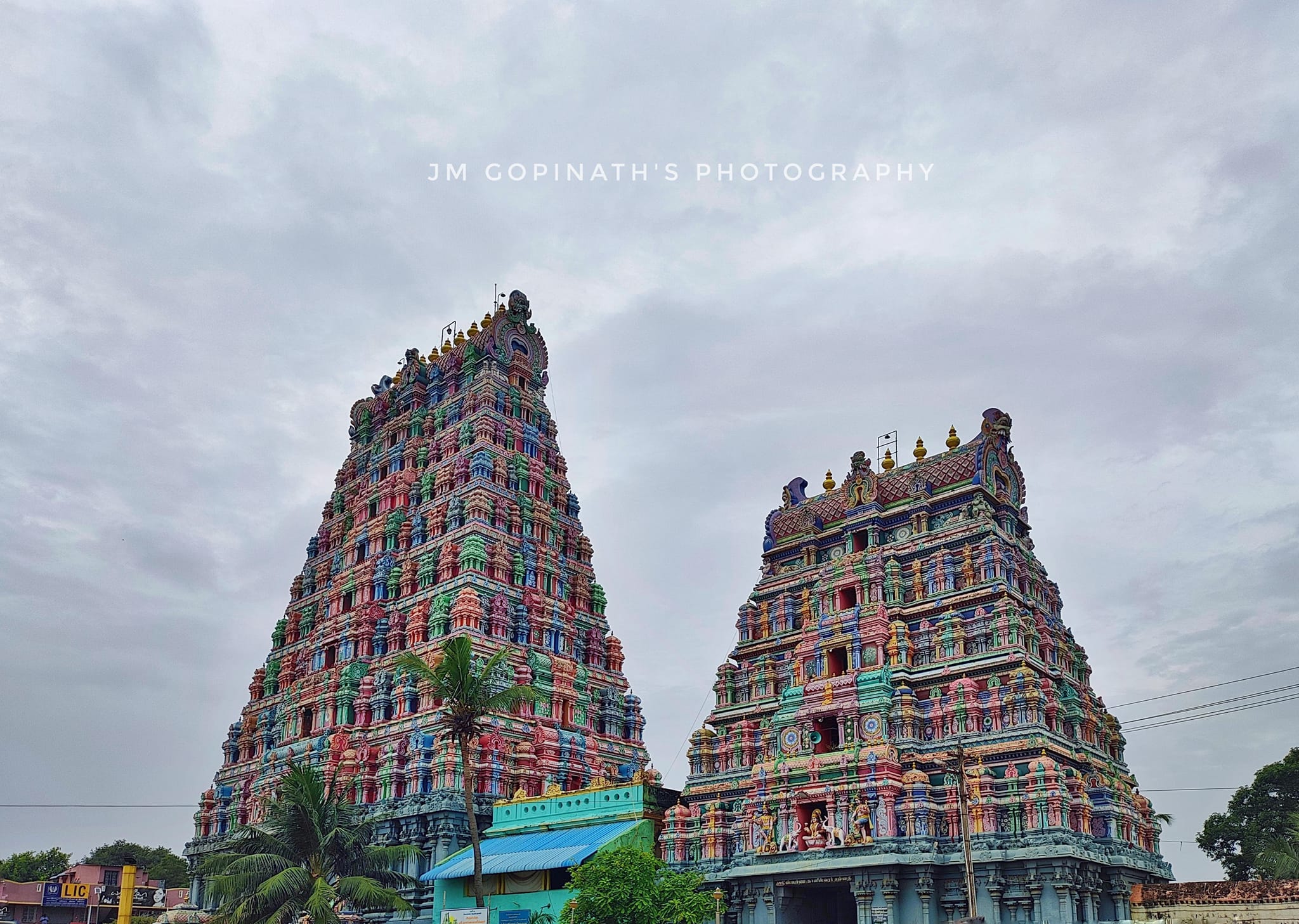
Western Rajagopuram: Unlike most major temples in Tamil Nadu, whose main gateway towers (Rajagopurams) face East, the magnificent Nine-tiered Gopuram here faces the West. Legend says the eastern side was left open because of its proximity to the sea.
Sanctum Sanctorum: The main shrine is uniquely set inside a cave-like structure carved out of the red sandstone cliff, standing below ground level.
Nazhi Kinaru: Just a short distance from the temple and the salty sea, there is a sacred well called Nazhi Kinaru which inexplicably yields clear, sweet, potable freshwater. Devotees take a dip in the sea and then cleanse themselves with water from this well before entering the temple.
Historical Resilience
The temple’s history includes tales of divine protection and resilience:
Dutch Occupation: In the 17th century, the temple was briefly occupied by the Dutch East India Company. They attempted to steal the idol of Lord Shanmukhar, but legend states they encountered a fierce storm at sea and threw the idol overboard. Later, a devotee, Vadamaliyappa Pillai, was guided in a dream to retrieve the idol, which was miraculously recovered from the ocean.
2004 Tsunami: The temple famously remained unscathed during the devastating 2004 Indian Ocean tsunami, with the massive waves reportedly stopping just short of the temple boundary, a phenomenon many devotees attribute to divine grace.
Major Festival
The most significant festival celebrated here is Skanda Sashti in the Tamil month of Aippasi (October-November), which culminates in the grand re-enactment of the Surasamharam (slaying of the demon Surapadman) on the sixth day, attracting millions of pilgrims worldwide.